





















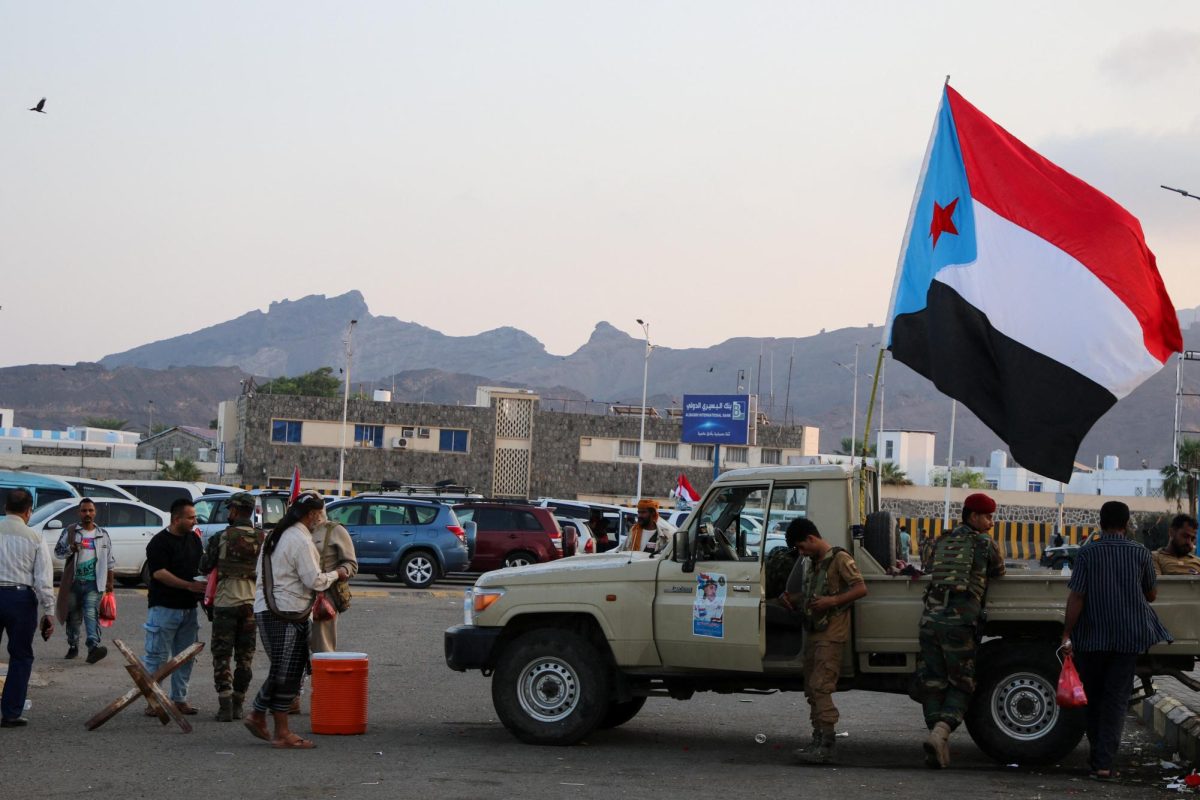
On January 2nd, South Yemeni separatists backed by the United Arab Emirates announced a constitution for an independent state in the midst of a decade-long civil war. Just days later, the Southern Transitional Council (STC), the authority behind the announcement and southern separatist movement, dissolved.
The pro-independence forces integrated back into the loose coalition between the internationally recognized national government, which has been primarily backed by Saudi Arabia, as they continue to fight pro-Iranian Houthi forces in the north of the country.
The Yemeni Civil War, which has been ongoing since 2014, has largely served as a proxy war between Iran and Saudi Arabia, the two strongest powers in the Middle East. The military campaign by the STC, which began in December, upset the delicate balance in the pro-government coalition while pitting the UAE, a smaller regional power, against Saudi Arabia. It also marked a sudden end to a stalemate in the conflict.
The STC was founded in 2017 as a secessionist movement looking to found a “State of South Arabia” along the borders of the 20th century nation of South Yemen. Though adamant in its push for independence from the Saudi-backed national government, it had not moved towards armed conflict until December, when it launched a rapid offensive, capturing the key city of Aden, home to the presidential palace. Several key government officials fled to the Saudi capital of Riyadh soon after.
The operation culminated in the STC’s announcement of a constitution for the State of South Arabia. The announcement was framed as a declaration of independence, though its ability to be enforced was unclear at the time. Just as the declaration was made, a Saudi counteroffensive began. By January 8, it swept through not just STC gains made in the week prior, but all territory claimed by the council, culminating in all non-Houthi territory falling under the control of the national government.
On January 9, Abdulrahman Jalal al-Sebaihi, the secretary-general of the STC, announced that it and its institutions would cease operations after the military defeat, with its former leaders looking to a conference in Riyadh to resolve the regional dispute. Despite this, the council’s spokesman contested its dissolution, saying that only the president needed to be present for such a dissolution to take place. STC President Aidarous al-Zubaidi fled to the UAE as the national government charged him with treason.
In explaining the organization’s sudden dissolution, al-Sebaihi told the AP that the STC had not officially approved the southern military operations, saying that they weakened the council’s coalition and harmed relations with Saudi-backed groups in the war-torn nation. The UAE announced a full withdrawal from Yemen in late December as its relations with Saudi Arabia became increasingly strained as the split between the STC and Saudi-backed forces intensified.
As the dust settles from the most recent development in its 11-year civil war, Yemen remains mired in a conflict that sees its territory — and people — serve as pieces in a regional proxy war between Saudi Arabia and Iran. The interplay of the two foreign nations in the conflict, as well as other regional powers (such as the UAE), domestic separatists and international organizations only magnifies its complexity and human cost.