







![Dec 21, 2024; Orlando, Florida, [USA]; Tiger Woods hits out of the bunker on the fourth hole during the PNC Championship at The Ritz-Carlton Golf Club.](https://spectator.lfanet.org/wp-content/uploads/2026/04/2026-04-03T174851Z_1_LYNXMPEM320LZ_RTROPTP_4_GOLF-1200x800.jpg)





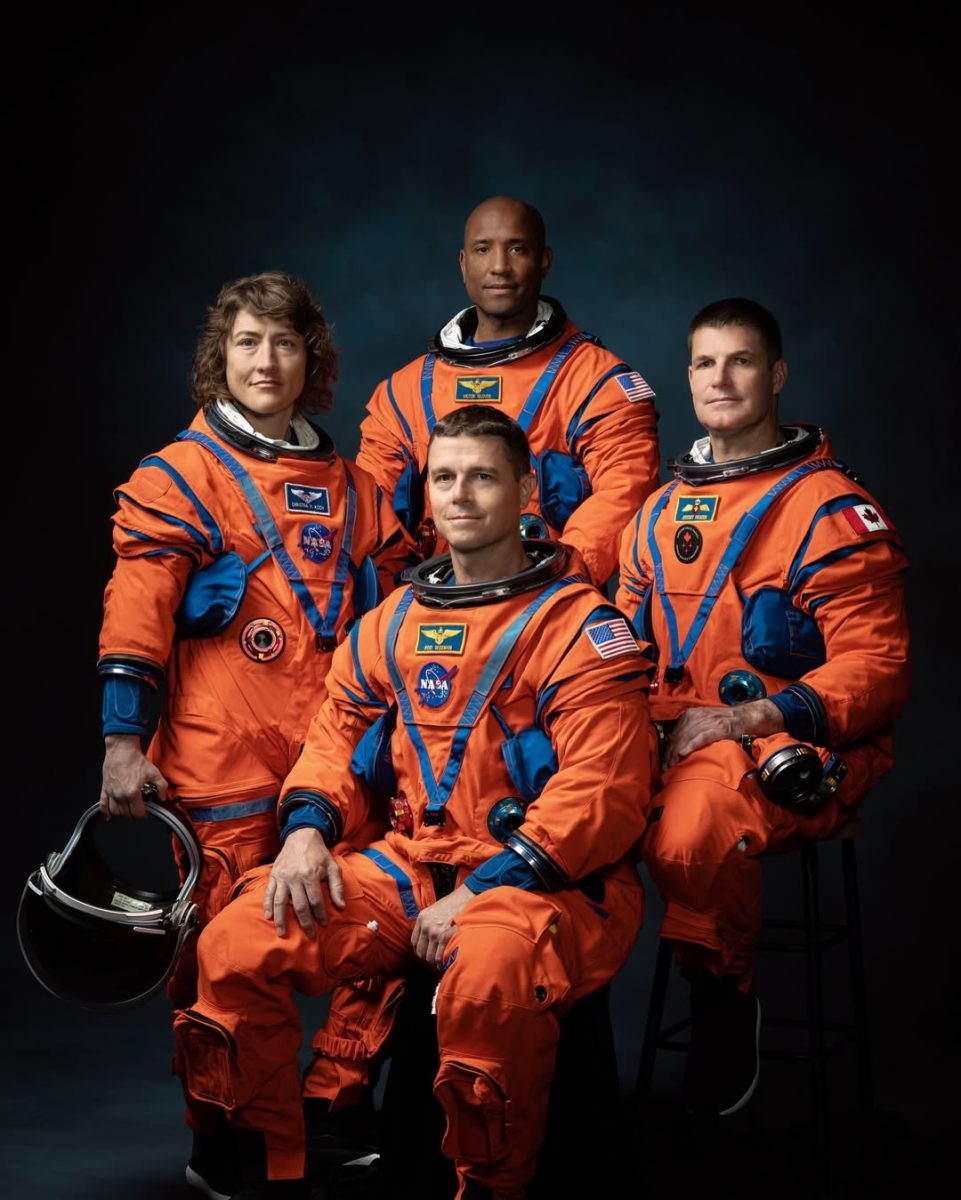





















On the evening of Wednesday, April 1, NASA’s Artemis II mission launched from Cape Canaveral in Florida, sending four humans to the moon for the first time since 1972. The mission set a number of records and helped to test the spacecraft that NASA will use to set up a permanent moon base in the coming years, but still people seem to be ignoring its significance. When the Apollo missions of the 1960s and 1970s launched, the entire country seemed to pause. With Artemis II, viewership was much more fragmented across multiple TV networks, livestreams and social media networks, while it also competed with other recent newsworthy events for people’s attention.
The Artemis II crew did not land on the moon on this mission, but instead orbited the dark side of the moon before returning home. The entire trip lasted ten days, splashing down in the Pacific Ocean off the coast of San Diego on April 10. The objective of Artemis II was to test the Orion capsule’s systems for the first time with humans onboard, ensuring that it is ready for future missions.
Compared to the Cold War era Apollo program, Artemis II garnered significantly less public excitement. While it is estimated that nearly a billion people watched or listened to Apollo 8’s Christmas Eve broadcast from the moon, there were only around 30 million concurrent viewers in Artemis II’s most important phases, launch and splashdown. Obviously different from Apollo however was the significant attention that Artemis II garnered on social media. Once the mission took off, many viral videos from the crew began going viral on earth, but overall attention worldwide for the mission still remained lower. This may be because Artemis repeats several key achievements that were already made by Apollo, and this mission does not see humans actually touching down on the moon again. Artemis perfectly represents the struggles of NASA having to relearn and rediscover techniques that were lost when regular moon missions ceased after the end of Apollo.
However, Artemis II accomplishes some notable new feats. On April 7, 2026, the astronauts broke a record set by Apollo 13 in 1970, traveling the furthest distance from Earth of anyone in human history. Among the crew is also the first woman to visit the moon, mission specialist Christina Koch; the first African American to visit the moon, pilot Victor Glover; and the first non-American to visit the moon, Canadian mission specialist Jeremy Hansen.
This more diverse crew represents a significant goal of Artemis II: going to the moon “For All Humanity,” a quote chanted by Hansen at liftoff on April 1. The crew traveled with a stuffed moon named “Rise” that contains an SD card with over five million names downloaded on it, meant to represent the unity of all humanity behind the Artemis program.
However, public excitement about Artemis II has also been dampened by significant cost overruns and delays since its creation in 2017. According to a Government Accountability Office (GAO) study from June of 2025, most of NASA’s major projects have run on time and on schedule since audits began in 2009. The one major exception to this has been the Artemis missions, which are running significantly behind what was initially promised. The first test flight of the SLS rocket and Orion capsule was meant to occur in 2012, but this mission was eventually delayed to 2017, and later delayed again to 2022; it then became what is now known as Artemis I, the first test flight Orion took around the moon. The same GAO study claims that Artemis has experienced nearly $7 billion in cost overruns, nearly equaling the total of all other over-budget NASA projects combined.
These ballooning costs and timelines all come at a time when NASA has proven its ability to produce meaningful advances in science without the need for crewed missions. Recent unmanned rovers like the Curiosity rover on Mars have achieved significant discoveries at a much lower cost than human spaceflight. A study from Pew Research Center finds that most US adults believe that sending humans to the moon and Mars should be among the lowest priorities for NASA: over 40% say these causes are “not too important”. Instead, those surveyed think that NASA’s top priority and focus should be on protecting Earth from asteroids and monitoring earth’s climate.
At the same time, many do not see the value in space exploration when the United States finds itself in an increasingly tense time on Earth, with high political polarization domestically and increasing geopolitical tensions internationally. The Apollo program took place in a much different era, one where almost the entire country was unified on one goal during the Cold War, and political polarization was much less prominent. Today, power transitions between presidential administrations can derail NASA’s plans and set them back years.
Space launches are also a much more common occurrence than they were back in the Apollo era. Almost weekly launches both by government organizations and commercial operators, such as SpaceX, have made space seem more accessible and less special. The growing commonality of satellite launches to low earth orbit are impressive, but launching deep space missions to the moon and beyond face a completely different level of difficulty.
The future of the Artemis program will be seen in the coming years. Artemis II has achieved its goal of testing Orion’s systems, as it has discovered a minor leak in one of its helium tanks as well as malfunctions with the spacecraft’s toilet. These issues will need to be adjusted and fixed before future launches, but, as of now, two further missions are scheduled.
Artemis III is set for sometime in late 2027 or early 2028 and will test the crew’s ability to dock with a lunar lander in earth orbit. Artemis IV is designed to send humans back to the surface of the moon for the first time since Apollo 17. This time, it would land on a site near the South Pole where a semi-permanent human outpost can be established on the surface and a space station can be placed in orbit around the moon. This mission is currently set to take off by 2028.